When do 6.7L injectors actually need replacing?
Rough idle, white haze, and long cranking get blamed on injectors constantly. Here is how we confirm it before spending your money.
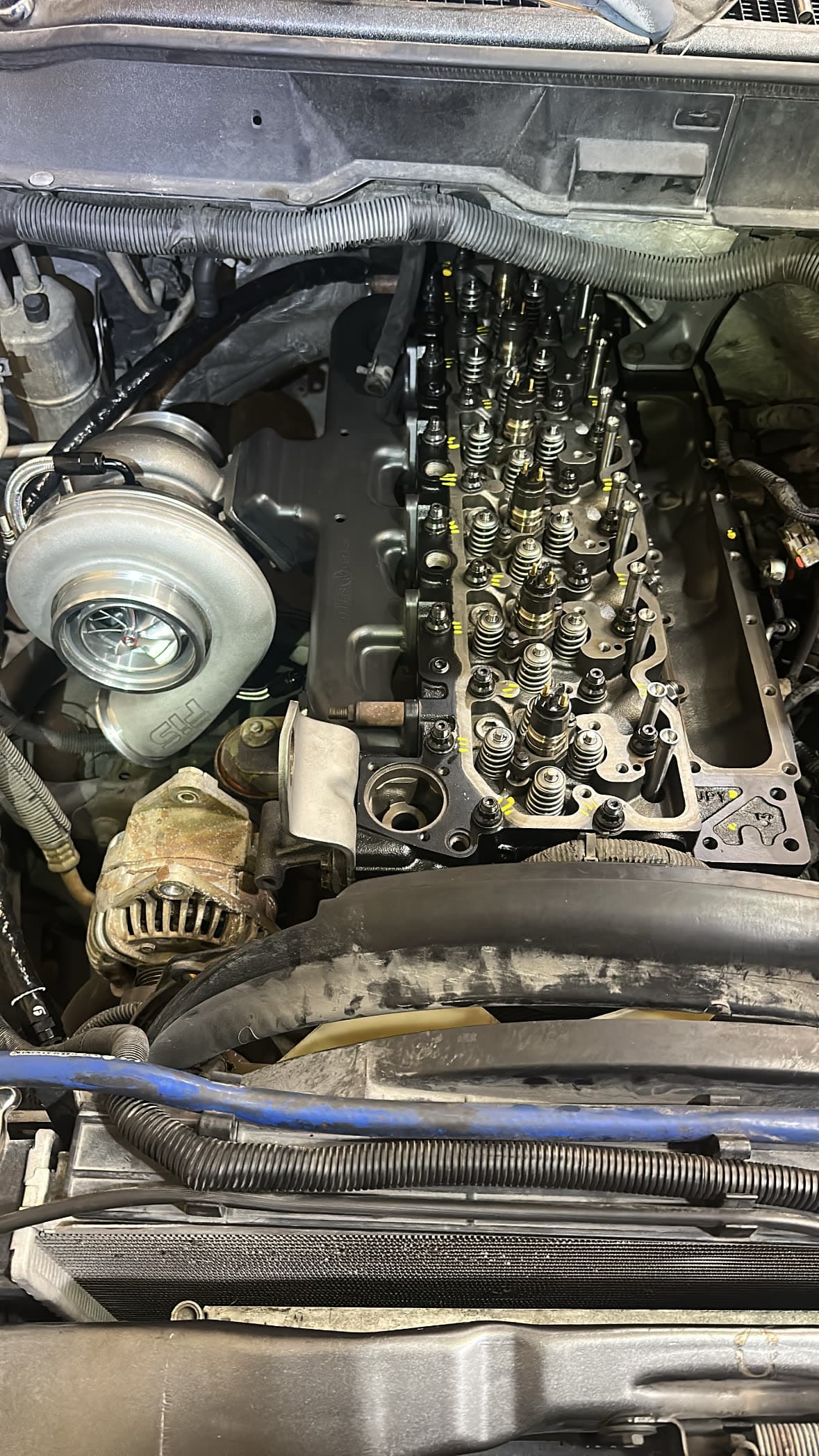
Injectors are the most frequently misdiagnosed part on a common-rail Cummins. The symptoms overlap with lift pump failures, air in the fuel, contaminated fuel, and electrical faults, and a set of injectors is not a cheap guess.
Symptoms that genuinely point at injectors
- A consistent miss on one cylinder that does not move when you swap components.
- White haze at idle that smells like raw diesel rather than coolant.
- Fuel in the oil — confirmed with an oil analysis, not a guess.
- Return flow far outside spec on a return-flow test.
- Hard starting when warm specifically, with normal cold starts.
What to rule out first
Before we quote injectors, we test fuel pressure and volume at the CP3, inspect for air intrusion on the suction side, check the fuel filter assembly for leaks at the water separator O-ring, and pull the balance rates on a scan tool.
| Test | What it rules out |
|---|---|
| Rail pressure under load | Failing CP3 or lift pump supply issue |
| Return flow test | Internal injector leak vs. pump wear |
| Cylinder balance rates | Which cylinder and how badly |
| Oil analysis | Fuel dilution from injector bodies |
| Suction-side pressure test | Air intrusion before the pump |
Why matched sets matter
The ECM trims fuel delivery per cylinder based on feedback. When five injectors flow slightly one way and a sixth flows another way, the ECM compensates constantly and idle quality suffers. A flow-matched set eliminates that variable.
Protect the new parts
New injectors behind a tired lift pump and a dirty filter assembly is a short conversation. We recommend addressing filtration at the same time — it is the difference between a repair and a fix.
Marcus Reyes
Lead Technician
Part of the Sunstate Diesel team in Orlando, Florida. We work on RAM/Cummins trucks daily and write these notes from what we actually see on the lift.